The Gaggia Classic Pro is a manual espresso machine — no touchscreen, no descale program, no light that tells you when it's time. That's part of why people love it: it's a mechanically simple, semi-professional machine at a home-machine price, without a computer standing between you and the shot. But that simplicity cuts the other way when it comes to maintenance. There's no built-in cycle to walk you through descaling, no on-screen prompt confirming each stage finished, and nothing that tells you when scale has built up beyond what's healthy for the boiler. You're mixing the solution and running it through by hand, on your own schedule. Here's the general shape of that process, based on Gaggia's own maintenance guidance, plus how to figure out how often you actually need to do it.
How to Descale a Gaggia Classic Pro (Step by Step)
Because the Classic Pro has no automatic descale mode, the process is closer to a manual maintenance routine than a guided cycle. According to Gaggia's guidance, it generally looks like this:
- Empty the water tank and drip tray. Start from empty so you can measure the right amount of fresh water and descaling solution without guessing around what's already in the tank.
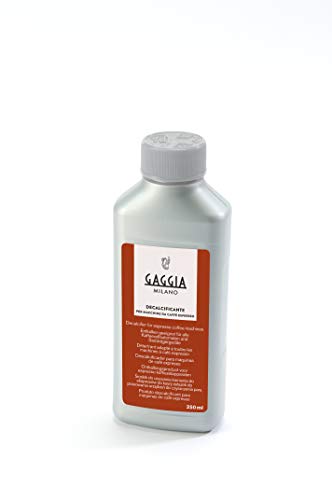
- Mix the descaling solution. Dilute a descaler made for espresso machines — Gaggia sells its own, and general citric-acid descalers work the same way — at the ratio printed on the bottle, then pour the mixture into the tank.
- Run it through the group head in stages. With no portafilter locked in (or an empty one, depending on what your manual specifies), run the machine as if pulling a shot so the solution passes through the group and out through where the portafilter normally sits. Most guidance calls for doing this in short bursts rather than one continuous pour, pausing between them.
- Run it through the steam wand too. The steam wand and its internal path scale up the same way the group does, so open the steam valve and let solution pass through there as well, in the same short-burst pattern.
- Let it sit. Many descaling routines call for letting the solution sit in the boiler for a period before continuing, giving it time to work on buildup rather than just passing through.
- Rinse thoroughly with fresh water. This is the step that matters most and the one people most often shortchange. Empty the tank, refill with plain water, and run it through both the group and the steam wand the same way you ran the descaler through — and plan on at least two full tanks of fresh water before you trust the machine with a shot you intend to drink.
Gaggia's manuals have varied somewhat across Classic and Classic Pro production runs, and the exact stage count, burst length, and how long to let the solution sit aren't identical from one printed manual to the next. Treat the sequence above as the general shape of manual descaling, not a substitute for the specific instructions in your machine's manual — if you don't have it, Gaggia's support site has PDF manuals by model and production year. When your manual and this guide disagree, follow your manual.
Check price
How Often to Descale a Gaggia Classic
The Classic Pro doesn't have a descale reminder, so unlike a lot of automatic machines, you're the one tracking when it's due. That makes water hardness and how often you actually pull shots more important to pay attention to than they'd otherwise be.
As a general starting point:
- Hard water: every 3–4 weeks of regular use.
- Medium/typical tap water: every 1–2 months.
- Soft or already-filtered water: every 2–3 months.
These ranges are a starting point, not a guarantee — a machine pulling several shots a day scales up faster than one used a couple of times a week, and actual mineral content varies a lot by location even within the same general hardness category. If you don't know your water hardness, cheap test strips give you a reading in under a minute and take the guesswork out of which end of these ranges applies to you.
Because there's no light or counter doing this tracking for you, it helps to build in your own signal — a reminder on your phone, or just noticing when shots start pulling slower or steam feels weaker than usual. Either can mean scale is building up before you'd otherwise think to check.
It's also worth writing the date down somewhere after each descale, even just a sticky note on the machine or a note on your phone. Without a counter tracking shots or cycles for you, it's easy to lose track of whether it's been six weeks or four months since the last one, especially if the machine sees uneven use — heavy on weekends, barely touched on weekdays. A written date turns the ranges above into an actual decision rather than a guess made from memory.
What to Use
Gaggia
No rating yetCheck Price →$9.95· as of Oct 27, 2026i
Product prices and availability are accurate as of the date/time indicated and are subject to change. Any price and availability information displayed on Amazon.com at the time of purchase will apply to the purchase of this product.
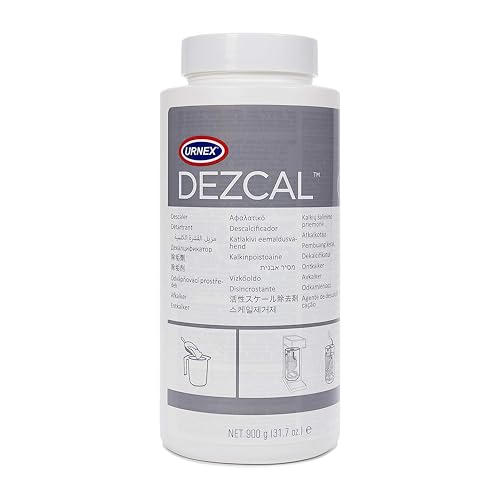
Urnex
No rating yetCheck Price →$29.98· as of Oct 27, 2026i
Product prices and availability are accurate as of the date/time indicated and are subject to change. Any price and availability information displayed on Amazon.com at the time of purchase will apply to the purchase of this product.
Third Wave Water
No rating yetCheck Price →$29.00· as of Oct 27, 2026i
Product prices and availability are accurate as of the date/time indicated and are subject to change. Any price and availability information displayed on Amazon.com at the time of purchase will apply to the purchase of this product.
Gaggia's own descaling solution is formulated for their machines and is the simplest default if you'd rather not think about compatibility. A general citric-acid descaler like Dezcal works through the same mechanism and is often cheaper per use. Pairing either with a water filter reduces the mineral load going into the boiler between descales, which stretches out the interval on the table above regardless of which descaler you use.
Related Reading
For the general principles behind descaling — why it matters, how the frequency table above is derived, and why manufacturers steer you away from vinegar — see the full guide: How to Descale an Espresso Machine. If you're comparing notes across brands, How to Descale a Breville covers the equivalent process for Breville's lineup.