Breville's espresso machines — the Barista Express, the Bambino, the Barista Touch, and the rest of the lineup — all use the same basic descaling logic: a built-in cycle that pulls a descaling solution through the boiler and internal lines, followed by a rinse. The tricky part is that the exact button presses and on-screen prompts differ from model to model, and Breville has changed its menus across generations of the same machine name. A Barista Express bought a few years ago may prompt you differently than one bought today, and the dial-based Bambino doesn't look anything like the touchscreen Barista Touch when you're standing in front of it trying to find descale mode. Here's how the process works in general, plus what to do when the descale light won't cooperate.
How to Descale a Breville (Step by Step)
According to Breville's own instructions, the descaling process on their machines follows a consistent shape, even though the specific buttons and menu names vary by model:
- Empty the drip tray and water tank. Start with a clean slate so you can add the right amount of fresh water and descaler without overflow.
- Mix the descaling solution. Breville sells its own descaler, and most citric-acid descalers made for espresso machines work the same way — dissolved in water at the ratio printed on the package, then poured into the tank.
- Enter descale mode. This is where models diverge the most. On some Breville machines you hold a dedicated descale button for several seconds; on touchscreen models like the Barista Touch, it's a menu option instead. Because Breville has revised these menus across product generations, don't rely on generic instructions here — follow the prompt sequence on your specific machine's screen or the button pattern shown in your printed manual.
- Let the cycle run. The machine will draw the solution through the boiler and internal lines, typically pausing partway through so it can sit and work on tougher buildup before continuing.
- Run the rinse cycle. After the descaling solution has cycled through, Breville's instructions call for flushing the system with plain water — often more than one full tank's worth — to clear out any remaining solution before you pull a shot for drinking.
- Confirm the light or indicator clears. Once the rinse is done, the descale indicator should turn off on its own, which is your machine's way of confirming it registered the cycle as complete.
Because Breville's button layout and screen prompts differ across the Barista Express, Bambino, Barista Touch, and other models, treat this as the general shape of the process rather than an exact script. Your machine's manual — or the on-screen instructions themselves — will have the precise sequence for your model, and it's worth checking the manual before you start rather than guessing at button combinations.
Check price
"Descale Light Won't Turn Off" and Other Snags
If you've run the cycle and the descale light is still on — or flashing instead of solid — a few things are commonly to blame, based on how these cycles are designed to work:
- The rinse phase wasn't completed. Most Breville descale cycles expect a full rinse step after the descaling solution runs through, and the machine may not clear the light until that rinse has actually finished. If you stopped the process early or the tank ran dry mid-rinse, running the rinse portion again is usually the fix.
- The cycle was interrupted. Unplugging the machine, opening a compartment, or the power blinking mid-cycle can leave the internal counter in a state where it doesn't think the descale actually completed, even if the liquid ran through.
- The indicator needs a manual reset. Some Breville models expect you to hold the descale button (or a specific button combination) for a few seconds after the cycle finishes to clear the light, rather than clearing it automatically. This varies by model, so check your manual for the reset sequence rather than assuming one.
- It's tracking shots, not time. On several Breville models the descale light is driven by a shot counter, so if you descaled recently but the light is already back on, it may genuinely be time again rather than a fault.
If none of that clears it, running a full second descale-and-rinse cycle start to finish, following your model's on-screen or manual instructions exactly, resolves most persistent cases. Pay particular attention to whether the tank had enough water for the full rinse phase — running out partway through is one of the more common reasons the light sticks around after what felt like a completed cycle. If the light still won't clear after that, it's worth checking Breville's support documentation for your specific model, or contacting Breville support directly, rather than continuing to guess at button combinations.
What to Use
Breville
No rating yetCheck Price →$29.99· as of Oct 27, 2026i
Product prices and availability are accurate as of the date/time indicated and are subject to change. Any price and availability information displayed on Amazon.com at the time of purchase will apply to the purchase of this product.
Urnex
No rating yetCheck Price →$29.98· as of Oct 27, 2026i
Product prices and availability are accurate as of the date/time indicated and are subject to change. Any price and availability information displayed on Amazon.com at the time of purchase will apply to the purchase of this product.
Third Wave Water
No rating yetCheck Price →$29.00· as of Oct 27, 2026i
Product prices and availability are accurate as of the date/time indicated and are subject to change. Any price and availability information displayed on Amazon.com at the time of purchase will apply to the purchase of this product.
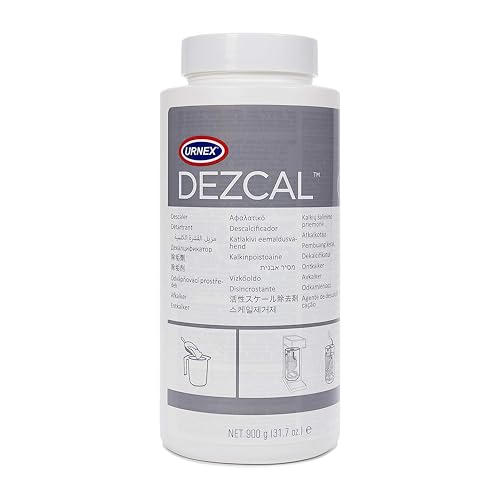
Breville's own descaler is formulated for their machines and is the safe default if you'd rather not think about it further. A general citric-acid descaler like Dezcal works the same way and is often cheaper per use. Either way, pairing it with a water filter cuts down on how often you need to descale in the first place, since it reduces the mineral load going into the boiler between cycles.
Related Reading
For the general principles behind descaling — why it matters, how often to do it based on your water hardness, and why manufacturers steer you away from vinegar — see the full guide: How to Descale an Espresso Machine. If you're comparing notes across brands, How to Descale a DeLonghi covers the equivalent process for DeLonghi's lineup.