De'Longhi's lineup spans everything from the compact, manual Dedica to fully automatic bean-to-cup machines like the Magnifica and Dinamica, and the descaling process looks a little different depending on which one is sitting on your counter. What they share is the same underlying logic: a built-in descale cycle that pulls a descaling solution through the boiler and internal lines, followed by a thorough rinse. Here's how that process generally works, plus what's usually behind a descale alert that won't go away.
How to Descale a De'Longhi (Step by Step)
According to De'Longhi's own maintenance guidance, the descaling process follows a consistent shape across the lineup, even though the exact menus and button presses vary by model:
- Empty the drip tray and water tank. Starting empty means you can add the correct amount of fresh water and descaler without overflow, and it keeps rinsed-out limescale from mixing back into old tank water.
- Mix the descaling solution. De'Longhi's own EcoDecalk descaler — or a comparable citric-acid descaler made for espresso and bean-to-cup machines — gets diluted with water at the ratio printed on the bottle, then poured into the tank.
- Start the descale program. This is where models diverge the most. Fully automatic machines like the Magnifica and Dinamica typically walk you through descaling from an on-screen menu or a dedicated descale icon, often triggered automatically once a built-in counter decides it's time. The manual Dedica line, without a display, generally uses a specific button-hold sequence instead. Because De'Longhi has revised these menus and indicators across product generations and machine families, don't treat any generic instructions — including these — as an exact script for your unit. Follow the prompts on your machine's screen, or the button sequence in your printed manual, rather than guessing.
- Let the cycle run in stages. De'Longhi's descale programs typically run the solution through in intervals, often pausing partway through so the solution can sit and work before the machine draws more through. Don't rush this by restarting the machine or topping off early — let each stage finish on its own.
- Rinse thoroughly. Once the descaling solution has fully cycled through, refill the tank with plain water and run the rinse portion of the program — usually more than one full tank's worth — before using the machine to brew anything you plan to drink.
- Confirm the alert clears. When the rinse cycle finishes correctly, the descale indicator should turn off or reset on its own, which is the machine's way of registering that it counted the cycle as complete.
Because the exact steps, icons, and hold-times differ across the Magnifica, Dedica, Dinamica, and other De'Longhi machines — and even between generations of the same model name — treat the sequence above as the general shape of the process, not a substitute for your specific manual. If you've misplaced it, De'Longhi publishes model-specific manuals on its support site, and it's worth pulling up the right one before you start rather than assuming your machine matches another model's steps.
Check price
"Descale Keeps Asking" / "Descale Light Stays On"
If you've run a full descale cycle and the machine is still prompting you to descale, or the indicator light stays lit instead of clearing, a handful of causes are typically responsible:
- The rinse phase wasn't completed. Most De'Longhi descale programs expect the rinse step to run to completion before they'll clear the counter, even if the descaling-solution portion finished fine. If the tank ran dry partway through the rinse or you stopped the program early, running the rinse step again from the start is usually what resolves it.
- The cycle was interrupted mid-run. Powering the machine off, opening the water tank compartment, or a brief power interruption partway through a descale cycle can leave the internal counter in a state where it doesn't register the cycle as finished — even if liquid ran through the system.
- The water-hardness setting is too sensitive. Many De'Longhi machines let you set a water hardness level during setup, and that setting drives how often the descale alert triggers. If it's set higher than your actual water hardness, the machine will flag descaling more often than it strictly needs to. Checking and adjusting this setting against your actual water hardness — with test strips, for instance — can space out how frequently the alert appears.
- It's counting cycles, not judging cleanliness. The alert is generally driven by a shot or cycle counter rather than a live sensor reading scale buildup, so a light that reappears quickly after a full descale isn't necessarily a sign anything went wrong — it may just mean the counter reset correctly and started counting toward the next interval.
If the light or prompt still won't clear after a full cycle done exactly per your manual — solution through, then complete rinse — running the program a second time from the beginning resolves most persistent cases. If it doesn't, that combination of symptoms is a reasonable point to check De'Longhi's support documentation for your specific model or contact their support team directly, rather than continuing to guess at reset sequences.
What to Use
De'Longhi
No rating yetCheck Price →$16.80· as of Oct 27, 2026i
Product prices and availability are accurate as of the date/time indicated and are subject to change. Any price and availability information displayed on Amazon.com at the time of purchase will apply to the purchase of this product.
Urnex
No rating yetCheck Price →$29.98· as of Oct 27, 2026i
Product prices and availability are accurate as of the date/time indicated and are subject to change. Any price and availability information displayed on Amazon.com at the time of purchase will apply to the purchase of this product.
Third Wave Water
No rating yetCheck Price →$29.00· as of Oct 27, 2026i
Product prices and availability are accurate as of the date/time indicated and are subject to change. Any price and availability information displayed on Amazon.com at the time of purchase will apply to the purchase of this product.
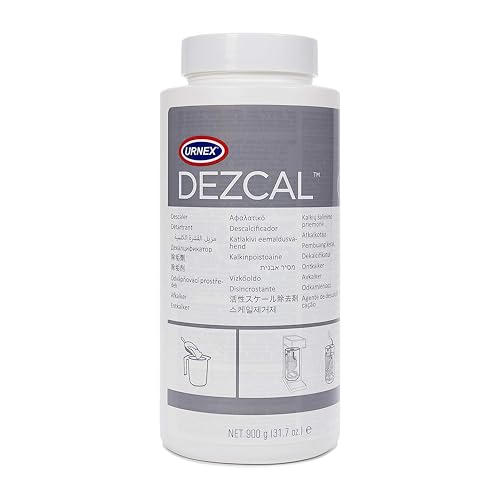
De'Longhi's own EcoDecalk is formulated specifically for their machines and is the safe default if you'd rather not think about compatibility further. Urnex's Dezcal is a widely used citric-acid alternative that works the same way and is often cheaper per use. Pairing either with a water filter reduces the mineral load going into the boiler between descales, which means less frequent cycles and fewer false-feeling alerts from a hardness setting tuned tighter than it needs to be.
Related Reading
For the general principles behind descaling — why it matters, how often to do it based on your water hardness, and why manufacturers steer you away from vinegar — see the full guide: How to Descale an Espresso Machine. If you're comparing notes across brands, How to Descale a Breville covers the equivalent process for Breville's lineup.