Best Coffee Mugs (2026)
Researched by Netspresso Editorial · Published Jun 5, 2026
The best coffee mugs for everyday use balance heat retention, comfortable ergonomics, and durability — and the right material depends on how you drink. For most people, a thick-walled porcelain set covers every situation; double-wall borosilicate glass is worth it if you want to watch your latte layers and keep the exterior cool to the touch; and a dedicated cappuccino cup keeps smaller espresso-based drinks at the right volume and temperature.
| Pick | Machine | Rating | Buy |
|---|---|---|---|
| Best Overall | Ceramic Coffee Mug Set | 4.7 | Check Price → |
| Best Insulated | Double-Wall Latte Glasses | 4.7 | Check Price → |
| Best for Smaller Pours | Ceramic Cappuccino Cups Set | 4.7 | Check Price → |
1Best Overall: Ceramic Coffee Mug Set

Sweese's thick porcelain walls absorb and hold heat effectively, the comfortable C-handle works for any grip size, and a six-piece set covers a full household without fuss.
$29.99· as of Oct 27, 2026 Product prices and availability are accurate as of the date/time indicated and are subject to change. Any price and availability information displayed on Amazon.com at the time of purchase will apply to the purchase of this product.i
2Best Insulated: Double-Wall Latte Glasses

Bodum's borosilicate double-wall construction traps an air pocket that keeps coffee hotter far longer than single-wall glass, while the outer surface stays comfortable to hold even with a full pour of hot liquid.
$31.99· as of Oct 27, 2026 Product prices and availability are accurate as of the date/time indicated and are subject to change. Any price and availability information displayed on Amazon.com at the time of purchase will apply to the purchase of this product.i
3Best for Smaller Pours: Ceramic Cappuccino Cups Set
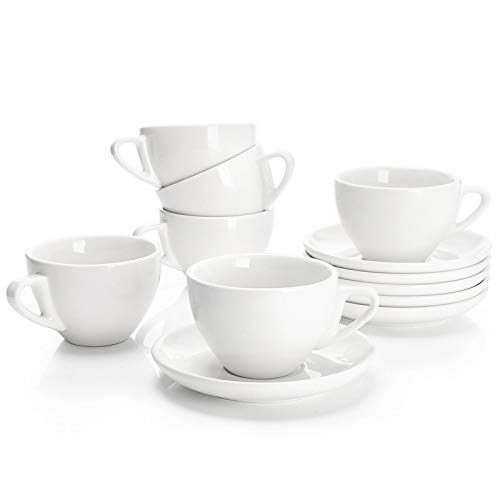
Sweese's 6 oz porcelain cups and matching saucers are sized precisely for cappuccinos and flat whites, ensuring your espresso-based drinks finish hot and at the right concentration.
$42.99· as of Oct 27, 2026 Product prices and availability are accurate as of the date/time indicated and are subject to change. Any price and availability information displayed on Amazon.com at the time of purchase will apply to the purchase of this product.i
For most coffee drinkers, the mug is an afterthought — but it has a measurable effect on the cup. Thin-walled mugs leach heat quickly, cold rims cool the first sip before it reaches your palate, and oversized vessels mean your coffee is lukewarm by the time you're halfway through. The right mug holds temperature, fits naturally in the hand, and suits the drink it was made for.
The Sweese Ceramic Coffee Mug Set is the right answer for most households: four thick-walled porcelain mugs sized for a standard 12–16 oz drip or filter coffee, dishwasher-safe, microwave-safe, and built to last years rather than months. If you make a lot of espresso-based milk drinks and want to watch the layering as you pour, the Bodum Double-Wall Latte Glasses offer genuine insulation in a contemporary format that suits lattes, Americanos, or black coffee. And for anyone who drinks cappuccinos, flat whites, or cortados daily, the Sweese Cappuccino Cups Set — porcelain cups with saucers at approximately 6 oz — keeps smaller pours at drinking temperature from first sip to last.
What Makes a Great Everyday Coffee Mug
The variables that separate a good daily mug from a mediocre one are consistent across reviewers and material scientists: capacity, wall thickness, handle comfort, material, and compatibility with modern kitchens.
The Right Size: 12–16 oz for Drip, Smaller for Espresso-Based Drinks
For standard drip or filter coffee, the 12–16 oz range is the consensus sweet spot documented across barista and consumer guides. Smaller (8–10 oz) cools too quickly for a slow morning drinker; larger (20 oz or more) forces you to brew more than you want just to fill the cup, diluting flavor if you're working to a recipe. The 12 oz mark is the most common café standard; 14–16 oz suits people who prefer a longer drink or add substantial milk.
For cappuccinos, flat whites, and cortados — drinks built around a precise ratio of espresso to milk — a dedicated 5–7 oz cup is the right tool. Pouring a cappuccino into a 16 oz mug dilutes the concept entirely: the drink cools faster, tastes thinner, and the foam-to-liquid ratio is wrong from the first sip. See our best cappuccino cups roundup for more on the smaller end of the spectrum.
Thick Walls and Heat Retention
Wall thickness is the primary driver of heat retention in traditional single-wall ceramic. A thicker wall — particularly in stoneware and high-fired porcelain — acts as thermal mass: it absorbs heat from the liquid and radiates it back slowly, keeping the drink warmer for longer and preventing the rim from shocking the palate with an immediate cold edge. Consumer Reports and independent mug reviewers at outlets including Serious Eats consistently find that thick-walled ceramic outperforms thin-walled ceramic of the same material at heat retention.
Double-wall glass works on a different principle — it traps a layer of air between two glass walls, and air is a highly effective insulator. Independent testing cited by Low Key Coffee Snobs found double-walled glass keeping coffee nearly 15 degrees hotter than single-wall ceramic at the 60-minute mark. The trade-off is that double-wall glass mugs are typically lighter (around 200g versus 370g for a ceramic equivalent), and they require more careful handling.
Comfortable Handle Design
Handle ergonomics matter more than most buyers anticipate. A loop that's too small for fingers to fit through forces a palm-grip that strains the wrist; a loop that's too wide provides no lateral control. Reviewers at Salt and Umber and Journeyman HQ both flag handle fit as a leading complaint in lower-rated ceramic sets. The ideal handle accommodates three to four fingers comfortably, sits close enough to the body of the mug for control, and is attached with sufficient bonding area to resist the mechanical stress of daily use and dishwasher cycles.
Ceramic vs. Double-Wall Glass
Ceramic and double-wall glass each have a clear use case, and most dedicated coffee households end up with both.
Ceramic (porcelain or stoneware) is opaque, feels substantial in the hand, retains heat well through thermal mass, is resistant to scratching and staining when properly fired, and typically lasts decades with normal use. The porous microstructure of ceramic is a better natural insulator than glass. Ceramic is also the traditional choice for espresso-based drinks — the material's thermal properties are why specialty coffee shops overwhelmingly use ceramic for cappuccinos and flat whites. The downside: heavier, and thin-walled versions from budget manufacturers perform little better than standard glass.
Double-wall borosilicate glass is transparent — which matters if you make lattes, cappuccinos, or any drink with visible layering — keeps the outer wall comfortably cool even with hot liquid inside, resists condensation (unlike standard glass), and doesn't absorb flavors or odors over time. Borosilicate is more resistant to thermal shock than standard glass, making it safer for hot liquids and sudden temperature changes. The downside: more fragile than ceramic in a drop scenario, and typically sold in sets of two rather than four.
For a deeper look at the trade-offs, see our ceramic vs. glass coffee cups guide.
Microwave and Dishwasher Compatibility
Any mug you're considering for everyday use should be both microwave-safe and dishwasher-safe. Microwave safety means the vessel won't crack from differential heating and contains no metallic glazes that can arc. Dishwasher safety means the glazing and bonding are rated to survive repeated exposure to high-temperature water and detergent. Lead-free, cadmium-free glazing is the current standard for reputable manufacturers and is worth confirming, particularly for imported ceramics.
The Picks: Deeper Rationale
Sweese Ceramic Coffee Mug Set — Best Overall
The Sweese set demonstrates why porcelain remains the default everyday mug material. Porcelain is fired at higher temperatures than earthenware, producing a denser, less porous structure that is more durable, chip-resistant, and consistent in its thermal behavior. The walls on the Sweese mugs are thick enough to absorb meaningful heat from your coffee, and reviewers across multiple platforms note that the rim stays warm rather than cold — an important detail for first-sip comfort that cheaper thin-walled mugs routinely fail.
The 16 oz capacity sits at the top of the standard drip-serving range, and the C-handle is generously sized for most hand widths. Both the porcelain body and the handle attachment are dishwasher-rated, and the mug is confirmed microwave-safe with lead-free, cadmium-free glazing. The six-piece set provides enough coverage for a household without duplicating more than you'll use.
At a set-of-four price point that undercuts many single-mug specialty options, the Sweese set represents the best combination of material quality, verified safety ratings, and daily practicality. For more options at this end of the category, browse our cups and mugs hub.
Bodum Double-Wall Latte Glasses — Best Insulated
Bodum's double-wall latte glasses are constructed from borosilicate glass — the same material used in laboratory glassware and high-end carafe construction — blown into a double-wall form that traps an insulating air layer between the inner vessel and the outer shell. The functional result is that coffee placed inside stays noticeably hotter than it would in a standard glass, and the outer wall remains comfortable to hold without any exterior heat transfer. Condensation, a common annoyance with standard glass and iced drinks, is eliminated on the outer surface.
At approximately 12 oz, the glasses suit lattes, Americanos, long blacks, and drip coffee equally well. The transparency is the defining feature for milk-drink preparation: the contrast between espresso, steamed milk, and foam is clearly visible as you pour, making technique easier to assess and presentation more considered. Reviewers at Low Key Coffee Snobs specifically highlight the combination of visual appeal and functional insulation as the primary reason to choose double-wall glass over ceramic for latte-style drinks.
The set-of-two format suits the category: double-wall glass requires more careful washing and storage than ceramic, and most households use these as a dedicated milk-drink vessel rather than a multipurpose daily mug. For a broader look at the double-wall glass category, see our best double-wall glasses roundup.
Sweese Cappuccino Cups Set — Best for Smaller Pours
A cappuccino — or flat white, cortado, or Gibraltar — is not a scaled-down version of a filter coffee. It is a distinct drink with its own volume logic: typically one or two shots of espresso (1–2 oz) combined with steamed and microfoamed milk to a total of 5–6 oz, with the milk-to-espresso ratio fundamental to the drink's character. Pour that into a 12 oz mug and the proportions fall apart: you'd need to add three to four times as much milk to fill the cup, producing something closer to a latte.
The Sweese Cappuccino Cups are porcelain at approximately 6 oz — the correct serving size for a traditional cappuccino. The matching saucers are a functional feature, not a decorative one: they give you a resting surface for a spoon, catch any overflow during pouring, and make the experience of drinking closer to café presentation. The thick porcelain walls maintain the drink's temperature through a quick consumption window; cappuccinos and flat whites are meant to be finished in a few minutes, and the thermal mass of a well-made porcelain cup is well-matched to that use case.
The set-of-four configuration with saucers makes these practical for household use rather than just entertaining. Lead-free, cadmium-free, dishwasher and microwave safe. For more context on this drink category, see our best cappuccino cups guide.
Frequently Asked Questions
What size mug is best for everyday coffee?
For drip, filter, or pour-over coffee, the 12–16 oz range is the documented consensus from barista guides and consumer reviews. Twelve ounces is the most common café standard and the right size if you drink at a moderate pace and want your coffee to stay warm throughout. Fourteen to sixteen ounces suits people who prefer a longer drink, add a substantial amount of milk, or tend to drink quickly and want the larger volume. Beyond 16 oz, heat retention becomes a significant problem for most single-wall mugs — the surface-area-to-volume ratio means a large volume of liquid cools faster than the mug's thermal mass can compensate for. For espresso-based drinks (cappuccino, flat white, cortado), a 5–7 oz cup is the appropriate size; a larger vessel changes the drink's proportions and undermines the drink's character.
Do thicker mugs keep coffee hotter?
Yes, and the mechanism is well-established. Thick ceramic walls — particularly in high-fired porcelain and stoneware — act as thermal mass: the material absorbs heat from the liquid and releases it back slowly, slowing the rate at which the coffee cools. Thicker walls also mean a warmer rim at first contact, which affects the perceived temperature of the first sip. Research cited by Barista Life and kedali.com confirms that ceramic's porous microstructure gives it lower thermal conductivity than glass, making it a better passive insulator when constructed with adequate wall thickness. Double-wall glass operates on a different principle — air insulation rather than thermal mass — and outperforms thick ceramic on raw heat retention at longer time intervals (60+ minutes), though thick ceramic performs comparably or better at the 20–30 minute mark that most drinkers actually care about.
Ceramic vs. glass mug: which is better?
Neither is universally better; they suit different drinks and priorities. Ceramic (porcelain or stoneware) is more durable, retains heat effectively through thermal mass, is comfortable to hold even with hot liquid inside, and is the traditional choice for filter coffee and espresso-based drinks. Glass — specifically double-wall borosilicate glass — offers superior heat retention at longer time intervals, keeps the exterior cool to the touch, shows your drink clearly (valuable for latte art and layered drinks), and doesn't absorb flavors over time. Single-wall glass performs poorly at heat retention and is not recommended for hot drinks. For a complete breakdown of the trade-offs across materials, see our ceramic vs. glass coffee cups guide.