Best Cappuccino Cups (2026)
Researched by Netspresso Editorial · Published Jun 5, 2026
The best cappuccino cups hold five to six ounces, feature a rounded or tulip-shaped interior to support foam structure, and are made from thick porcelain or double-wall glass that keeps a small drink at temperature while you sip it. Whether you want traditional ceramic elegance or a modern glass that puts the layered drink on display, the right cup genuinely improves both the taste and the experience of a well-pulled cappuccino.
| Pick | Machine | Rating | Buy |
|---|---|---|---|
| Best Overall | Ceramic Cappuccino Cups Set | 4.7 | Check Price → |
| Best Glass | Double-Wall Cappuccino Glasses | 4.6 | Check Price → |
| Best for Larger Drinks | Double-Wall Latte Glasses | 4.7 | Check Price → |
1Best Overall: Ceramic Cappuccino Cups Set
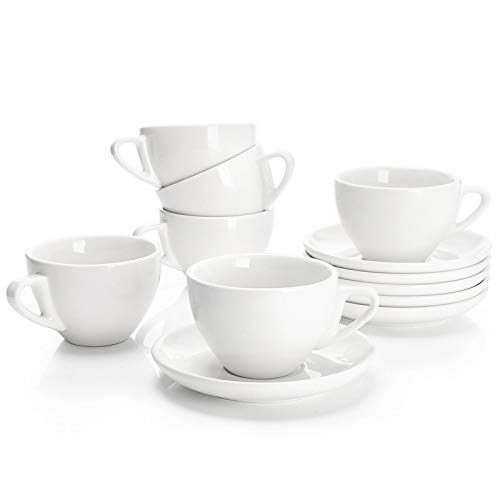
Sweese's lead-free porcelain set hits the classic 6 oz cappuccino size with thick walls that pre-warm efficiently and a wide mouth that invites latte art.
$42.99· as of Oct 27, 2026 Product prices and availability are accurate as of the date/time indicated and are subject to change. Any price and availability information displayed on Amazon.com at the time of purchase will apply to the purchase of this product.i
2Best Glass: Double-Wall Cappuccino Glasses

Bodum's double-wall borosilicate construction keeps cappuccinos hot three times longer than single-wall glass while creating the striking floating-drink illusion that makes every shot worth showing off.
$40.58· as of Oct 27, 2026 Product prices and availability are accurate as of the date/time indicated and are subject to change. Any price and availability information displayed on Amazon.com at the time of purchase will apply to the purchase of this product.i
3Best for Larger Drinks: Double-Wall Latte Glasses

At roughly 12 oz, Bodum's double-wall latte glasses are the right vessel for cappuccino-style drinks scaled up with more steamed milk, or for any flat white, cortado, or latte you want to serve with the same insulated elegance.
$31.99· as of Oct 27, 2026 Product prices and availability are accurate as of the date/time indicated and are subject to change. Any price and availability information displayed on Amazon.com at the time of purchase will apply to the purchase of this product.i
A cappuccino is traditionally five to six ounces: espresso plus equal parts steamed milk and dense foam. Serve it in an eight-ounce mug and the proportions collapse — the foam spreads thin, the temperature drops too fast, and the drink the barista built falls apart. The right cup is the last piece of the equation.
For most home baristas, the Sweese Ceramic Cappuccino Cups Set is the clear everyday choice: classic porcelain, the correct size, dishwasher-safe, and available with matching saucers. If you prefer glass — and want to watch espresso bloom up through steamed milk — the Bodum Double-Wall Cappuccino Glasses offer genuine thermal insulation alongside a striking visual. And for larger drinks, flat whites, or scaling up for guests, the Bodum Double-Wall Latte Glasses deliver the same quality construction at a volume that fits those recipes.
What Makes the Ideal Cappuccino Cup
Size: 5–6 oz
Traditional Italian cappuccino specifications, as referenced by barista educators at Barista Magazine and coffee standards bodies, call for a finished drink of 150–160 ml — approximately five to five and a half ounces. Some leeway extends to six ounces without distorting the espresso-to-milk ratio; beyond that, the proportions drift toward latte territory. A cup sized to the drink also retains heat better: a small volume in a large vessel has more surface area relative to its mass and cools noticeably faster.
Shape: Rounded Bowl or Tulip
A rounded, U-shaped interior or tulip-flared profile concentrates espresso at the base, guides steamed milk around it during a free-pour, and gives foam a stable surface to dome above the rim. Straight-sided cylindrical cups work against latte art and produce flatter foam. Coffee educators and cup designers at sites including HomeGrounds and CoffeeChronicler identify shape — alongside size — as one of the two most-overlooked variables in cappuccino drinkware.
Pre-Warming
Pouring espresso into a cold cup can cause an immediate temperature drop of around 10°C (18°F), according to guidance published by Jura and documented by coffee educators at Whole Latte Love. That shock collapses crema faster and accelerates cooling of the finished drink. Running hot water into the cup for fifteen to twenty seconds before pulling a shot counteracts this. Thick-walled porcelain and double-wall glass both hold warmth efficiently once pre-warmed.
Ceramic vs. Glass
Thick porcelain retains heat through its own mass and the micro air pockets inherent in ceramic structure, as documented in thermal testing at Malacasa and Papel Espresso. Double-wall glass (Bodum's method) traps a physical air gap between two borosilicate layers, delivering insulation Bodum rates at three times the performance of single-wall glass. Porcelain wins on traditional café atmosphere; double-wall glass wins on pure heat retention and visual appeal — both are legitimate choices depending on your priorities.
The Picks in Depth
Sweese Ceramic Cappuccino Cups Set — Best Overall
Sweese's porcelain set lands at six ounces — the outer edge of the classic cappuccino spec — with a wide rim that facilitates latte art pours and gives foam room to dome above the lip. The lead-free porcelain is fired to a dense, smooth finish; reviewers at Homegrounds and RealHomeCoffee note the premium feel relative to the price. Each cup includes a matching saucer, and the set is dishwasher, microwave, and oven compatible.
The honest caveat flagged by CoffeeChronicler and others: heat retention is moderate rather than exceptional. Pre-warming matters more here than with double-wall glass — run hot water into each cup for twenty seconds before pulling your shot and you will notice the difference.
For demitasse and smaller espresso formats, see our best espresso cups roundup.
Bodum Double-Wall Cappuccino Glasses — Best Glass
Bodum's Pavina and Bistro double-wall series are the reference standard for insulated glass drinkware in specialty coffee. High-heat borosilicate glass — the same material used in laboratory equipment — tolerates temperature swings from -30°C to 180°C. The trapped air gap between the two layers delivers insulation that Bodum rates at three times the performance of single-wall glass, with a silicone vent at the base equalizing pressure between layers to prevent seal failure over time.
At roughly 6.7 oz, these glasses sit just above the strict Italian cappuccino spec but well within a range that preserves espresso-to-milk balance. The rounded base creates the striking floating-drink visual that makes this format a fixture in modern specialty coffee shops. Reviewers at Seattle Coffee Gear, 1st in Coffee, and across Amazon consistently cite thermal performance and visual clarity as the decisive reasons to choose these over ceramic.
For more insulated glass options across sizes, see our best double-wall glasses guide.
Bodum Double-Wall Latte Glasses — Best for Larger Drinks
At approximately 12 oz, these glasses are the right tool when the recipe scales up: a flat white with more steamed milk, a café au lait, or a milk-forward cortado stretched to fill a longer morning. They are not a cappuccino cup in the strict sense — the size prevents the correct foam-to-espresso ratio from forming at traditional cappuccino volumes — but for home baristas who want one glass that covers both a small morning cappuccino and a larger afternoon latte, they deliver without compromise.
The double-wall borosilicate construction is identical to the smaller cappuccino glasses, so thermal performance, the floating-drink visual, and long-term durability all carry over. The extra volume is also forgiving: milk drinks that are a few grams off scale look and taste correct here in a way they do not in a tightly sized cappuccino cup.
How Size Shapes the Drink: Cappuccino vs. Latte Ratios
A cappuccino is built on equal thirds: one part espresso, one part steamed milk, one part stiff foam, filling a five-to-six-ounce vessel to the brim with foam domed slightly above the rim. A latte uses the same espresso base but three to four times more steamed milk — SCA-aligned standards put the finished latte at 11–15 oz, with espresso representing a much smaller fraction of the drink. Cup size is structural, not cosmetic: a cappuccino recipe poured into a latte glass produces a thin, foam-starved drink; a latte recipe poured into a cappuccino cup overflows.
This is why the three cups in this guide fill distinct roles. The Sweese ceramic set and the Bodum cappuccino glasses are purpose-built for the 5–6 oz drink. The latte glasses serve when the recipe grows beyond that window. See our espresso cup sizes guide and the cups category overview for more on matching vessel to drink.
Frequently Asked Questions
What size is a cappuccino cup?
Five to six ounces (approximately 150–180 ml). That range corresponds directly to the drink's composition — one or two espresso shots plus equal parts steamed milk and dense foam — proportioned so the cup is full and the foam domes slightly over the rim. Sources including Lifeboost Coffee, CoffeePlusThree, and barista educators across specialty coffee publications consistently reference this window. Cups marketed as cappuccino cups but sized at eight ounces or above alter the ratio and produce a noticeably thinner, less structured drink. Always confirm the listed volume before purchasing.
Why does a rounded shape matter for cappuccino?
A curved base concentrates the espresso at the lowest point and gives steamed milk a natural path to fold around it during a free-pour. The wider mouth lets foam build upward and dome above the rim rather than spreading flat across a large surface. Straight-sided cylindrical cups disrupt both behaviors: milk moves differently, foam has no curvature to hold it, and latte art becomes harder to execute. Cup shape is one of the two variables — alongside size — that barista educators and designers at HomeGrounds and CoffeeChronicler identify as most often overlooked.
What is the difference between a cappuccino cup and a latte cup?
Size, mapped directly to recipe proportions. A cappuccino cup targets 5–6 oz for the drink's equal-thirds structure of espresso, steamed milk, and foam. A latte cup targets 11–15 oz because a latte uses the same espresso base but three to four times more steamed milk. Pouring a cappuccino into a latte glass produces a thin, under-built drink; pouring a latte into a cappuccino cup overflows the vessel. Shape differs too: cappuccino cups tend toward a rounder bowl; latte cups run taller and straighter to accommodate greater volume. The Bodum latte glasses in this guide illustrate that distinction clearly.
For more on matching cups to espresso drinks, see our espresso cup sizes guide.